
An MRI scan is a common method used in the diagnosis, assessment and treatment of many different types of cancer. It can be used to determine whether a tumour is cancerous or not, and helps doctors to understand whether cancer has spread (metastasised).
MRI can also show whether treatment has been effective and if any cancerous tissues remain after treatment.
The scanning process is painless and doesn't use any radiation, so it will not cause harm if you require multiple scans throughout treatment and aftercare.
What is cancer?
Cancer is a condition where abnormal body cells grow and divide uncontrollably. This means they can invade surrounding healthy tissues, and destroy the tissues. There are more than 200 types of cancer, across different organs and body parts.
Uncontrollable growth and multiplication of cancer cells can be caused by genetic changes in the cells, and can result in a tumour or lump.
Sometimes, cancer that begins in one part of the body can spread to another part, which is called metastasis. The first cancer is called the primary, and secondary cancers occur through metastasis.
Doctors can grade cancer into different stages, based on how big it is, and if it has spread or not. These stages give an idea of the treatments that might work best, and how quickly the cancer could grow.
Common types of cancer
-
Breast Cancer - The most common type of cancer in women. Can sometimes affect men.
-
Lung Cancer - A leading cause of cancer-related deaths, most commonly caused by smoking.
-
Prostate Cancer - The most common cancer in men over the age of 45.
-
Colorectal Cancer - Cancer affecting the large intestine, also known as bowel cancer.
-
Skin Cancer - Often related to UV exposure.
-
Bladder Cancer - Most common in people aged 60 or over and linked to smoking.
-
Kidney Cancer - Can affect people of all ages, but is most common in people over 60.
-
Liver Cancer - Linked to excessive alcohol consumption. Can also form as a secondary cancer after spreading from another organ.
-
Pancreatic Cancer - Uncommon in people under 40. Mostly affects people over 65.
-
Ovarian Cancer - Mostly affects women over the age of 50, often diagnosed late, but is more treatable the earlier it’s caught.
-
Cervical Cancer - Most common in women aged 30 to 35, but can affect women of any age. Nearly all cases are caused by the human papillomavirus (HPV).
-
Uterine Cancer - Cancer of the womb. Most common in post-menopausal women.
-
Testicular Cancer - The most common cancer in males aged 15 to 44 years.
-
Thyroid Cancer - A rare cancer, but it affects more women than men.
-
Brain Cancer - Known as a malignant brain tumour and starts in the brain or spreads from another part of the body.
-
Bone Cancer - Primary bone cancer starts in the bones, most commonly of the hips, pelvis, legs and arms, and is known as a sarcoma. Secondary bone cancer starts in a different part of the body and spreads to the bones.
-
Stomach Cancer - One of the least common cancers affecting the digestive system.
-
Oesophageal Cancer - Cancer of the gullet (food pipe), sometimes linked to smoking and excessive alcohol consumption.
-
Laryngeal Cancer - Cancer of the voice box, more common in men over the age of 40. Linked to smoking and excessive alcohol consumption.
-
Leukaemia - A type of blood cancer affecting the white blood cells of the bone marrow. The most common form of childhood cancer.
-
Lymphoma - A type of blood cancer affecting the white blood cells and lymph nodes of the immune system.
-
Myeloma - A type of blood cancer affecting plasma cells.
What are the main symptoms of cancer?
Different types of cancer cause different symptoms, and people may also experience them differently. However, the following symptoms could be a sign of cancer and should be investigated:
-
Unexplained pain or swelling
-
Lumps and bumps
-
Unusual bleeding or bruising
-
Changes in bowel or bladder habits
-
Persistent indigestion
-
Difficulty swallowing
-
Unexplained weight loss
-
Skin changes, including changes to moles or a skin rash
-
Persistent headaches
-
A lingering cough
-
Extreme tiredness (fatigue)
Causes of cancer
Cancer is caused by changes in the DNA that lead to uncontrollable cell growth. This damage can be completely random or inherited. However, there are certain risk factors that can increase our chances of developing cancer, including:
-
Smoking
-
Being overweight or obese
-
Excessive alcohol consumption
-
Excessive UV exposure
-
Eating a diet high in saturated fat, sugar, salt and ultra-processed foods, and low in fibre, fruits, vegetables and wholegrains
-
Living a sedentary lifestyle
-
Being exposed to certain environmental and workplace toxins and chemicals
-
Being exposed to certain viruses
-
Changes in hormone levels
Prognosis and treatment
If you’re diagnosed with cancer, your treatment options will depend on the type of cancer, where it is and how advanced it is. Cancer treatment includes chemotherapy, radiotherapy, immunotherapy, hormone therapy, surgery, nerve stimulators to manage pain or a combination of two or more treatments.
Can an MRI scan detect cancer?
Yes. An MRI machine is used to produce detailed images of the inside of the body. These scan images are then analysed and interpreted by a consultant radiologist who looks for abnormalities, including cancer.
Why do I need an MRI scan for cancer?
If you have discovered a lump in your body, or are suffering from symptoms of cancer such as unexplained bleeding, unexpected weight loss, or changes to your bodily functions, an MRI scan is a key imaging method to either diagnose or rule out cancer.
MRI scans are useful for:
-
locating tumours that aren’t visible externally
-
deciding whether a tumour is or isn’t cancerous
-
finding out how big a tumour is
-
seeing whether cancer has spread
-
measuring blood flow in the area of the tumour
-
checking whether treatment is working, for example radiotherapy or chemotherapy
-
making sure cancer hasn’t come back in the months and years following treatment (in remission)
Dealing with the prospect of cancer can be a worrying time for you and your loved ones. It is important to get a diagnosis as soon as possible, and have any lumps or concerns seen by your doctor or examined using MRI.
Early diagnosis is the key to a better prognosis, and optimises the opportunities for treatment.
How an MRI scan for cancer works
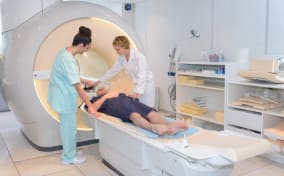
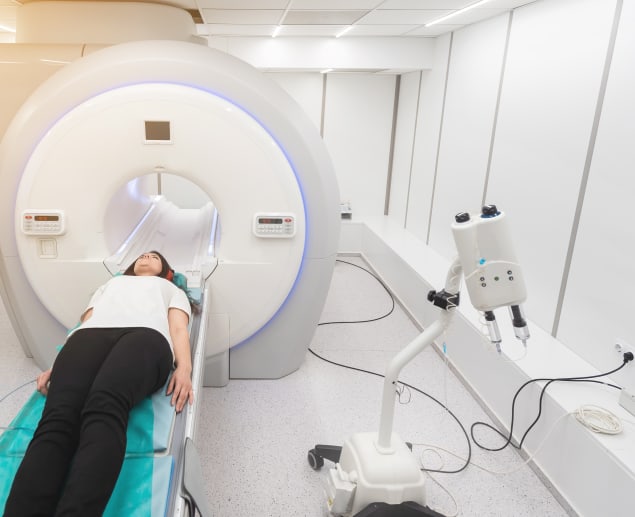
Unlike X-rays and CT scans, MRI imaging doesn’t involve radiation. Instead, an MRI scanner uses a strong magnetic field and radiofrequency waves to temporarily disrupt the hydrogen atoms in the body. As these atoms realign, they generate energy that’s captured by computers to create detailed images of the bones, soft tissues, organs, glands, nerves and blood vessels. Any abnormalities within these structures are identified on the scan results by a consultant radiologist.
For some MRI scans, you may need an injection of a contrast dye beforehand. This helps create more detailed pictures of the blood vessels and any potential tumours. Some people are allergic to these dyes, especially those with kidney problems, and you’ll be monitored throughout.
Diagnosing cancer
Various tests are used to diagnose cancer. If you have symptoms that need investigation, your doctor may refer you for initial blood tests. Depending on your test results, you may then be referred for different imaging tests (scans) and further investigations. The tests you have will depend on your symptoms and where they are in your body.
-
Physical Examination - To feel for lumps and abnormalities.
-
Medical History Review - Provides a detailed overview of your symptoms, current health and medical history.
-
Blood Tests - For signs of inflammation and infection.
-
Tumour Marker Tests - Detects substances produced by cancerous tumours in the blood.
-
Urine Tests - Tests for signs of blood and infection in the urine.
-
Biopsy - A small sample of cells is taken from a lump or another area of interest, using a long, thin needle. Depending on the area, this may be performed using a local anaesthetic to numb the area, or while you’re sedated.
-
Imaging Tests - A range of scans used by doctors to create detailed images of the inside of the body. You’ll be asked to change into a hospital gown and remove any jewellery, piercings and glasses beforehand. The resulting scan pictures are used to detect abnormalities and rule out or diagnose conditions such as cancer.
-
X-ray - Used to scan the bones, chest, lungs and heart.
-
MRI Scan - Used to assess the bones, soft tissues, brain and spinal cord. MRI scans don't use radiation. They’re unsuitable for patients with metal implants, and as they’re performed in an enclosed space, they may not be suitable for patients with claustrophobia. An open MRI may be suitable in some cases, which helps reduce feelings of claustrophobia.
-
CT Scan - Used to create detailed images of the bones, soft tissues and organs and to stage and monitor cancer using X-ray radiation. CT scans are also used when an MRI scan isn’t suitable.
-
Ultrasound - Used to assess the lumps and bumps, and examine the soft tissues, blood vessels, glands, and organs of the abdominal and pelvic cavities using sound waves.
-
PET Scan - Used to identify cancer at a cellular level using a radioactive tracer dye, sometimes used in conjunction with a CT scan.
-
Endoscopy - A long, thin camera is passed down the throat to look for signs of cancer in the upper abdominal tract, usually under sedation. Biopsies can also be taken at the same time and investigated for cancerous cells.
-
Colonoscopy - A long, thin camera is passed into the lower abdominal tract through the anus to look for signs of cancer, usually under sedation. Biopsies can also be taken at the same time and investigated for cancerous cells.
-
Mammography - A type of low-dose X-ray used to screen the breasts for cancer.
-
Cervical Screening - A swab is used to collect cells from the cervix (the lowest part of the womb, connected to the vagina) to test for the presence of cancer.
-
Genetic Testing - Advanced blood tests to look for certain genes that may predispose you to a higher risk of developing certain cancers.
Why an MRI Scan is a Good Option
An MRI scan is considered the gold standard scan used for diagnosing cancer affecting many parts of the body. MRI scans are used to investigate symptoms affecting specific parts of the body, and a full-body MRI can detect whether cancer has spread to other areas.
A whole-body MRI can also be used to look for early signs of cancer as part of a health and wellness check, if you have no symptoms. These private MRI scans can be booked without a referral from your GP.
How accurate is Magnetic Resonance Imaging in detecting cancer?
Research has shown that MRI scans are 77% accurate when distinguishing between malignant (cancerous) and benign (non-cancerous) tumours. This is one reason why it is the preferred modality for imaging and evaluating soft-tissue tumours.
MRI scans also find nearly 90% of all breast cancers - more than ultrasounds and mammograms combined. MRIs are usually more successful at finding tumours than they are at distinguishing between benign and malignant.
Alongside accuracy, there are other important measures to ensure the success of a diagnostic test:
-
sensitivity is a measure of how often a test is correct when a positive result is generated for people who do have a condition
-
specificity measures how well a test correctly generates a negative result for people who don’t have a condition
MRI scans have a specificity of 85% when differentiating between non-cancerous and cancerous tumours, which means false negatives are low.
What does cancer look like on an MRI?
MRI scan images are usually black and white, with various shades of grey. MRIs also produce images from different angles (cross sectional images) all around the body, and are best at showing soft tissues.
Cancerous tissue can show up on MRI images as a white or very light mass, whereas it would be dark in colour on an ultrasound image. Contrast dye, which is a substance injected into the body before some MRI scans, enables the cancer to present more brightly on MRI scan images.
They can cause you to experience a metallic taste and warming sensation during your scan, but it's important to let your radiographer know if you have previously had an allergic reaction to a contrast medium such as gadolinium.
Can an MRI detect cancer anywhere in the body?
MRI scans are best for imaging soft tissues, including the brain, nerves, organs, cartilage, tendons, muscles and ligaments. They can generate very detailed images that can be used for diagnosing cancer. They can also be used to stage cancer, which means finding out how advanced it may be, or how early it has been found.
Therefore, MRI scans are particularly good for detecting:
-
brain tumours
-
primary bone tumours
-
soft tissue sarcomas in muscle, tendons, fat, blood vessels and nerves.
-
tumours affecting the spinal cord
-
some forms of bone marrow cancer
-
tumours in the pelvic organs and reproductive system (prostate cancer, bladder cancer, uterine cancer, ovarian cancer and certain liver cancers)
-
Recent research even showed that MRI screening was a more effective method of identifying prostate cancer than previous physical DRE (digital rectal examination) or PSA blood tests.
Sometimes, your imaging test will form part of a series of tests including blood tests, biopsies and various scans.
MRI scan vs CT scan for cancer: what other imaging tests are there?
If you have metal fragments, implants, shrapnel, medical devices like cochlear implants and surgical clips, or other permanent metal objects implanted in your body, you may be recommended a CT scan instead of an MRI scan.
This will depend on the type of cancer investigation needed, as CT is not always suitable for soft tissue imaging, but the MRI machine's strong magnetic field can interact with metal objects, body piercings, artificial joints and other metal items.
CT scans for cancer
When choosing an MRI or CT scan for cancer detection, it's important to speak to medical professionals, as cancer is a complex health issue that benefits from early detection. There are also some limitations and safety concerns for each scan type, such as metal objects being affected by MRI's magnetic field, while CT scans use ionising radiation in the form of X-rays, that can be harmful if over-used.
Getting the right scan quickly is key for fast diagnosis and access to treatment.
The key differences between MRI and CT for cancer are:
-
Lung imaging - CT is the modality of choice for spotting and staging lung cancer
-
CT also can be used to check the whole body for metastases (cancer cells that have spread elsewhere in the body) quickly and efficiently
-
CT is also commonly used for staging cancers
-
CT is not as good for identifying cancer in the pelvic organs - MRI would usually be chosen in these cases, such as for the prostate, uterus, and certain liver cancers.
Compared to MRI, it's important to consider: how accurate is ct scanning for cancer? It really depends on the type of cancer the scan is aimed to examine. The lungs and colon are most commonly scanned with CT for cancer detection, while MRI is preferred for the soft tissues and some pelvic organs, as well as brain cancer imaging.
Finding support for cancer
Being diagnosed with cancer is understandably upsetting, and help and support are available from your GP and wider medical team. They can also put you in touch with relevant charities and support groups that can help you with everything from talking to children and loved ones about your diagnosis, to dealing with side effects from cancer treatment and living day-to-day with cancer.
https://www.macmillan.org.uk/cancer-information-and-support/get-help
Sources:
Cancer Research UK. (2022, October 27). What is cancer? https://www.cancerresearchuk.org/about-cancer/what-is-cancer
Cancer Research UK. (2023, October 10). Stages of cancer. https://www.cancerresearchuk.org/about-cancer/what-is-cancer/stages-of-cancer
CT Scan vs. MRI: What’s the Difference? And How Do Doctors Choose. (2022, December 8). Memorial Sloan Kettering Cancer Center. https://www.mskcc.org/news/ct-vs-mri-what-s-difference-and-how-do-doctors-choose-which-imaging-method-use
England, N. (n.d.). NHS England » Earlier diagnosis. https://www.england.nhs.uk/cancer/early-diagnosis/
MRI scan. (n.d.). Tests and Scans | Cancer Research UK. https://www.cancerresearchuk.org/about-cancer/cancer-in-general/tests/mri-scan
RAGCP. (n.d.). Clinical guidance for MRI referral [PDF]. https://www.racgp.org.au/download/Documents/Guidelines/MRI referrals/clinicalguidancemrireferral.pdf
Soft tissue Sarcoma—Patient version. (n.d.). National Cancer Institute. https://www.cancer.gov/types/soft-tissue-sarcoma
Study: MRI has best breast cancer detection rate. (n.d.). https://www.radiologytoday.net/archive/rt0915p7A.shtml
UCSF Department of Radiology & Biomedical Imaging. (2016, February 6). What does cancer look like? UCSF Radiology. https://radiology.ucsf.edu/patient-care/for-patients/video/what-does-cancer-looks
Website, N. (2024, February 2). Cancer. nhs.uk. https://www.nhs.uk/conditions/cancer/
Wj, C., Chung, H., Mj, S., Sh, L., Mh, L., Js, L., Kim, D. Y., & Lee, W. (2012). MRI to differentiate benign from malignant soft-tissue tumours of the extremities: a simplified systematic imaging approach using depth, size and heterogeneity of signal intensity. British Journal of Radiology, 85(1018), e831–e836. https://doi.org/10.1259/bjr/27487871
Tips for understanding studies. (n.d.). Health News Review. https://www.healthnewsreview.org/toolkit/tips-for-understanding-studies/understanding-medical-tests-sensitivity-specificity-and-positive-predictive-value/